
Many business owners feel tired from counting money every day. They also feel tired from paying workers and keeping records. In 2026 more owners choose finance and accounting outsourcing latin america. They get help from skilled people who live closer to North America. This choice grows fast. The people there share almost the same work hours. They understand similar ways of doing business. They also cost less than hiring at home. This guide walks you through everything in plain words. You can see if it fits your company. You will learn what the work looks like. You will see which countries stand out. You will learn the good parts and the hard parts. You will also get clear steps to begin.
Understanding Finance and Accounting Outsourcing
Finance and accounting outsourcing means you ask a team in another place to handle the money jobs for your business. The team writes down every dollar that comes in. They also write down every dollar that goes out. They pay the workers on time. They send the right tax forms to the government. They make clear reports that show how the business is doing. They keep track of bills that people owe you. They also keep track of bills that you owe others. Sometimes they even look at the numbers. Then they share simple ideas about how to grow.
In real life the work happens through shared computer screens. It also happens through daily talks. You send them the papers or computer files. They do the counting. Then they send the finished work back. Some companies give away the whole money department. Others keep a few people at home. They share the rest of the jobs. A third way lets the outside team run everything. They follow clear rules that you both agree on. Each way lets your own workers spend more time on the things that make the business special.

Why Latin America? The Competitive Landscape
Latin America sits close to the United States and Canada on the map. This means the clocks almost match. You can talk to the team during normal work hours. You do not wait until the middle of the night. The people also share many of the same holidays. They share many ways of speaking about business. Many of them speak both Spanish and English. This makes talks smooth. The pay for skilled workers is lower than in North America. So you save a large part of the money you would spend at home.
Compared with far-away places in Asia, the shorter distance cuts travel time. You can visit when you want. Compared with Eastern Europe, the language mix and time match often feel easier for North American teams. Over time these small differences add up. You get faster answers. You also get fewer mix-ups. That is why many leaders now look first at finance and accounting outsourcing latin america. They need steady help with money work.
Top Countries for Finance and Accounting Outsourcing in Latin America
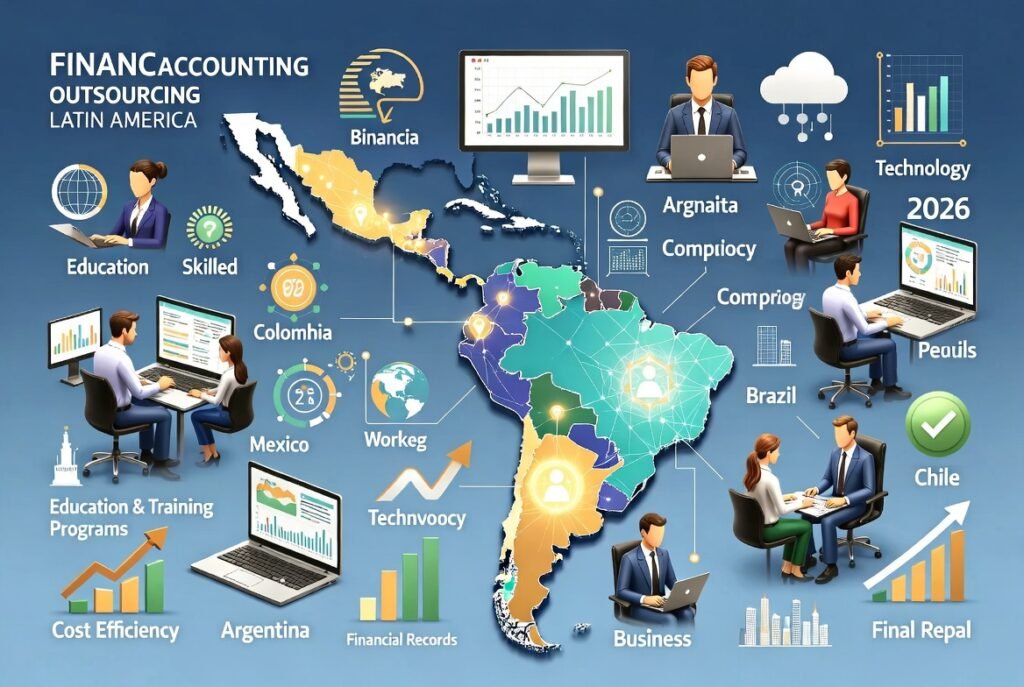
Mexico sits right next to the United States. Its workers share almost every work hour with U.S. teams. Big cities have strong schools. Those schools train many people in money skills. The roads and internet are ready for business. Colombia has grown fast. It has young workers who speak clear English. They also enjoy learning new computer tools. Argentina offers deep knowledge in careful number work. It has high English levels. Its money rules can change, though. Brazil has the largest number of trained people. It serves both local and foreign companies. Chile keeps strict rules. Those rules make records clean and safe. Peru gives solid help at lower cost for basic counting jobs.
Each country brings its own strong points in 2026. Mexico leads when daily talks matter most. Colombia shines for growing teams that need bilingual help. Argentina fits best when you want sharp analysis. Brazil works well for large groups. Chile and Peru round out the list for steady, lower-cost support. Governments in several of these places offer tax breaks. They also offer training programs. These help new teams start faster.
Key Benefits of Finance and Accounting Outsourcing in Latin America
The biggest win is lower cost. Many companies pay about half or even less than they would at home. They get the same skilled work. You also gain people who already know the tools and rules. So you skip long training time. The outside team can grow or shrink quickly. This happens when your business changes size. Your own workers stay free to sell more products. They can also invent new ideas. Over time the reports become clearer. They arrive faster. The outside team uses the latest computer helpers. Real companies have cut the days needed to finish monthly records. They went from two weeks down to a few days. They still kept every number correct.
Another good thing is peace of mind. You know the money work is in careful hands. You sleep better at night. Your team at home feels less stress. They can focus on happy customers and new plans. The savings add up month after month. That extra money can help the business grow in other ways.
Challenges and Risk Mitigation Strategies
Rules about taxes and money can look different from one country to the next. Data must stay safe from people who should not see it. Good workers sometimes leave for other jobs. Talks can feel slow if the team is new. To handle these, pick a partner who already knows the local rules. Choose one that holds strong safety certificates. Write clear plans that say exactly who does what and when. Meet online every week at first. This way everyone stays on the same page. Offer fair pay and learning chances. Then workers want to stay. These simple steps turn most problems into small bumps. They do not become big stops.
You can also start small. Give the new team just one or two jobs at first. Watch how they do. Then add more work when you feel sure. This careful way keeps risk low. It builds trust step by step.
How to Choose the Right Outsourcing Partner in Latin America
Start by listing the exact money jobs you want to hand over. Next look for teams that already do those jobs for other companies like yours. Check that they know the tax rules in your country and theirs. Ask about the computers and safety tools they use. Make sure their way of talking feels friendly and clear. Read the agreement that lists what they promise to finish each month. Also read what happens if something goes wrong. A short checklist helps. Look for skills match. Look for safety proof. Look for cost that fits. Look for past happy customers. Look for easy ways to talk. Visit by video or in person if you can. Take time with this step. The right partner feels like part of your own team.
Talk to at least two or three teams. Ask the same questions each time. Write down the answers. Compare them side by side. This helps you pick the best fit for your needs.
Technology Integration and Digital Transformation
In 2026 the best teams use smart computer tools. Those tools do the boring counting by themselves. They run programs that read bills. The programs match them to bank records. No person has to type every line. Cloud systems let everyone see the same numbers at the same moment. Robots copy numbers from one place to another in seconds. Data helpers spot patterns that people might miss. These tools mean fewer mistakes. They also mean faster answers. New money apps also link bank accounts and sales systems. The whole picture stays up to date. The result is that the outside team spends more time giving useful ideas. They spend less time on plain typing.
These tools keep getting better every year. They help the team work faster and cleaner. Your reports come sooner. The numbers stay more correct.

Regulatory and Compliance Considerations
Every country has its own tax forms and due dates. Data protection laws say how personal numbers must be locked away. Some places now follow rules that look a lot like the strict ones in Europe. Partners must keep records ready for checks. They must tell you right away if any rule changes. Stay close to your partner. Then you both follow the newest rules. Good teams already hold the papers that prove they meet safety standards. This careful watch keeps your business safe from fines. It also keeps trust high with customers.
Ask your partner to show you their safety papers. Ask how they train their people on the rules. Good partners are happy to share this. It shows they take care of your information.
Industry-Specific Outsourcing Applications
Factories use the help to track the cost of making each item. They also use it to pay suppliers on time. Technology companies need fast reports. Those reports show cash coming in from many countries. Health businesses must keep private patient money details locked. They still meet strict rules. Online stores need quick counting of sales from many places. They also need clear tax forms for each place. Banks and money firms look for deep skill in complex reports. Each field has its own special needs. Yet the same base of careful counting and clear talking works across all of them. Partners who already serve your type of business start faster. They make fewer wrong turns.
If your business is in one of these areas, look for a team that already knows it. They will understand your daily needs better. The work will feel smoother from the first day.
Case Studies and Success Stories
One mid-size maker of goods moved its bill-paying and record-keeping to a team in Mexico. Within one year the company cut money-work costs by almost half. It also finished monthly reports three days earlier. A growing online shop hired help in Colombia for sales tracking and tax forms. The outside team found small mistakes that had been hiding. The shop saved thousands. Free staff focused on new products. A health group in the United States used a partner in Chile to handle private billing. Accuracy rose. The group passed every safety check with ease. These stories show real numbers going up. They also show stress going down when the fit is right.
These companies started with care. They chose partners who understood their work. They checked the results often. That is why the results stayed strong.
Future Trends and Outlook for 2026 and Beyond
Smart tools will keep getting better at handling the plain jobs. People will spend more time on ideas that help the business grow. More companies will ask for clear reports about how the work helps the planet and the people around it. Teams will mix office days with home days. This fits the flexible style already common in the region. New ways to track digital money will appear in the records. Schools and training programs will keep turning out more skilled workers. Those workers know both numbers and computers. All of this points to steady growth for finance and accounting outsourcing latin america in the years ahead.
The future looks bright for teams that stay ready to learn. New tools and new skills will keep making the work better. Businesses that start now will be ready for the changes.

Implementation Roadmap: Getting Started
First write down which money jobs take the most time. Also write down which ones cause the most worry. Next search for partners who already do those jobs well. Talk to two or three. Ask the same questions so you can compare. Once you pick one, plan the move in small steps. Daily work never stops this way. Write a clear agreement that lists every job. List every due date. List every safety rule. Start with one or two jobs. Watch the results for a few weeks. Then add more work as trust grows. Keep talking every week at first. Check the numbers against the promises. Over time you will fine-tune the setup. It will run almost by itself.
Take one step at a time. Do not rush. Each small step builds a stronger base. Soon the whole process feels easy and natural.
FAQ
What is the main reason companies pick Latin America over Asia for money work?
The clocks almost match. Talks happen during normal day hours instead of late at night.
How much money can a small business usually save?
Many save between forty and sixty percent. This is compared with hiring the same skills at home.
Do the workers speak English well enough for daily talks?
In the top countries many workers speak clear English. They also speak Spanish or Portuguese.
Is it safe to share bank and tax numbers with a team in another country?
Yes when the partner holds strong safety certificates. They also follow strict data rules that you both check.
How long does it take to start after you sign the agreement?
Most teams can begin simple jobs in two to four weeks. This happens once the papers and computer links are ready.
Can I visit the team in person if I want?
Yes. Flights from North America are short. Many companies welcome visits so trust grows faster.
What happens if the partner does not meet the agreed goals?
A good agreement lists clear steps. It also lists extra time to fix problems or a fair way to end the deal.
Will the outside team replace my own workers?
Most companies keep key people at home. They only hand over the heavy counting jobs. The home team can focus on bigger plans.
Conclusion
Finance and accounting outsourcing latin america gives busy companies a warm, practical way to lighten the load of money work. It keeps quality high at the same time. The close clocks, shared ways of talking, skilled people, and lower costs all work together. They free your team for the jobs that matter most. You now know the main countries. You know the real benefits. You know the simple steps to choose a partner. You also know the clear path to begin. Take the first small step today. List the money jobs that tire you most. Reach out to a few teams. Ask honest questions. Start with one easy piece of work. Many owners who took that step say they wish they had done it sooner. Your business can feel the same relief and room to grow.
Disclaimer
This article is only for general learning. It is not money advice or a promise of results. Rules and costs change. Always talk with trusted experts before you make any business choice.

Stephen D. Schmitt is the founder and lead writer at Her Net Worth Journey. He created the site to make personal finance easier to understand and easier to act on, without the jargon that makes most money advice hard to follow. Stephen focuses on practical, number-driven guidance — the kind of advice a reader can apply the same day they read it. He writes about budgeting, investing, saving, and debt from a simple starting point: track the number, then make decisions that move it in the right direction. Stephen lives in Maitland, Florida, and manages Her Net Worth Journey directly, from the content to the free tools on the site.